Pilot-scale validation involves taking a new battery material or process and running it through a pilot production process to verify that it works as expected outside the lab and to uncover any issues before committing to mass production. It’s a critical step because some innovations that perform well in coin cells or small batches might encounter problems when scaled up. By validating at pilot scale, engineers and scientists gather data on yield, reproducibility, quality control metrics, and performance of the produced cells. If a problem is found at pilot scale, it often involves an iterative improvement process. This step helps de-risk the scale-up, ensuring that before going to full production, most wrinkles have been ironed out.
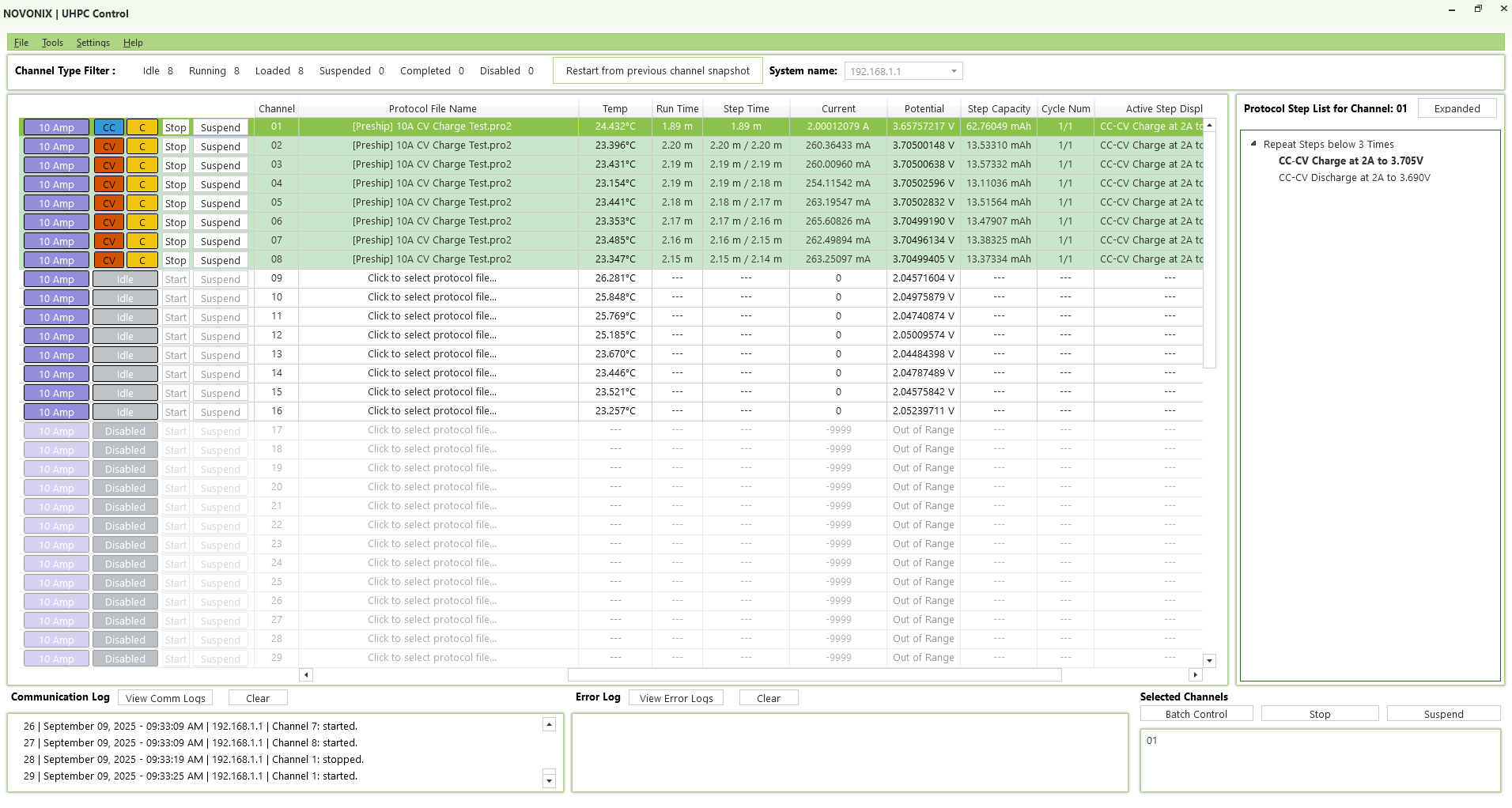
NOVONIX provides pilot-scale validation services for both its internal projects and external clients. Suppose a client has developed a promising new cathode powder. NOVONIX can incorporate that powder into electrodes using pilot-scale equipment and then build cells, validating whether the cathode can be processed with standard methods and whether the resulting cells meet performance targets. They would monitor how the material handles slurry mixing (homogeneity and rheology), coating (loading stability, adhesion, etc.), calendaring (ability to achieve target density), etc. Performance of pilot cells (capacity, rate, life) is compared against lab-scale cells to see if scale introduced any performance loss. NOVONIX’s detailed analytics during this validation can pinpoint if any step is sub-optimal. For example, they might find that a certain binder works better at scale for that material, or that the formation protocol needs adjusting. By engaging in pilot-scale validation, NOVONIX helps companies understand the impacts of new materials on large-scale production and speeds up the development cycle, giving confidence that a technology is ready for commercial manufacturing.