A pilot line is a small-scale version of a full production line for batteries, allowing companies to produce prototype cells in quantities sufficient for testing, without the expense of full-scale manufacturing. It typically includes equipment for mixing slurries, coating electrodes, compression, cutting, stacking or winding, electrolyte filling, formation, cycling, etc. The idea is to bridge the gap between lab-scale and mass production. On a pilot line, one can evaluate how a new material or process would perform in a realistic manufacturing setting, identify any scale-up issues, and produce enough cells (dozens or hundreds) for more rigorous testing or to send to customers for validation.
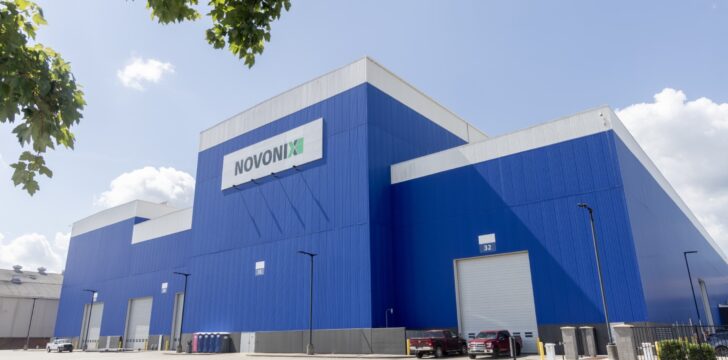
NOVONIX operates a pilot line as part of its Services offering at the Battery Technology Solutions division. Tey can take novel materials – whether it’s a new cathode, anode, separator, or electrolyte – and make pouch or cylindrical cells using industrially relevant processes to see how those cells perform. They might, for example, produce a batch of 100 stacked pouch cells with a new high-silicon anode and run them through cycle life testing to demonstrate performance compared to non-silicon containing standard cells made with the same materials. The pilot line is also used to fine-tune process parameters, such as optimal slurry mixing for good dispersion and slurry stability, or an optimized electrolyte filling strategy. This is invaluable for materials companies or automakers who want to see data on near-commercial cells. The pilot line helps identify if a new material presents any concerns from a manufacturing perspective: is the slurry stable, does it coat uniformly, does the coating adhere to the substrate, well, etc. By offering pilot line capabilities, NOVONIX accelerates the timeline for battery innovations to move from lab to market, providing a realistic testing ground for new technologies.