Depth of Discharge (DOD) is a term that indicates how much of a battery’s capacity has been used. It is the complement of State of Charge (SOC); if a battery is at 30% DOD, it means 30% of the battery’s energy has been discharged (and 70% remains, which would be 70% SOC). 100% DOD means the battery has been fully discharged. Managing DOD is important because battery lifespan is tied to how deeply batteries are cycled: generally, shallower discharge cycles (lower DOD) allow more cycles before cell capacity begins to fade significantly compared to cycling a battery to 100% DOD. Many manufacturers specify cycle life at a certain DOD (e.g., 500 cycles at 100% DOD, more cycles if only 80% DOD is used, etc.).
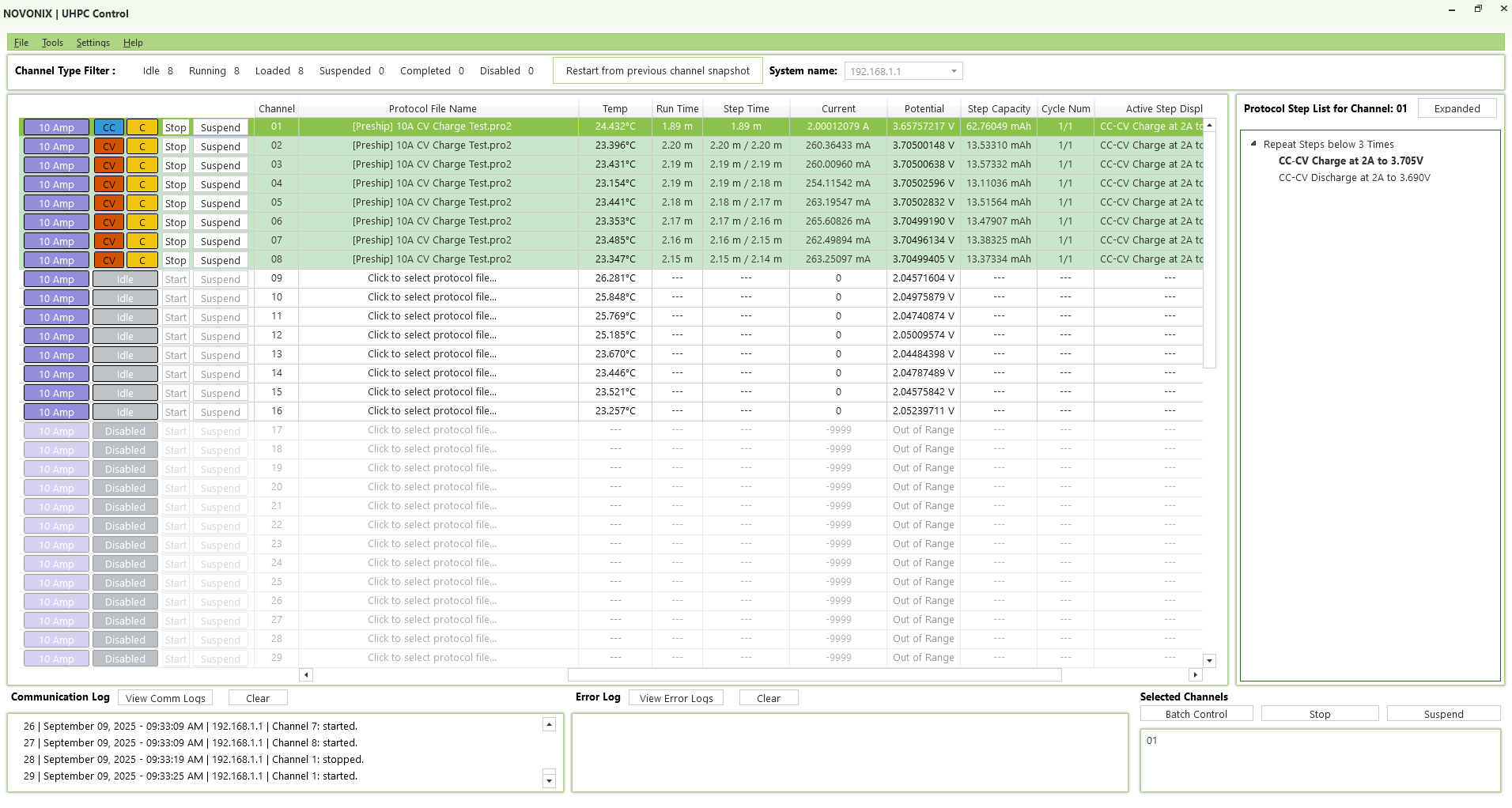
NOVONIX examines how the depth of discharge affects battery aging by cycling cells to various DOD levels. For example, NOVONIX might run a test where one set of cells is cycled between 0–100% (full discharge) and another set is cycled between 0–50% (partial discharge) and compare how quickly each set loses capacity. Using precision measurements including NOVONIX UHPC equipment, can detect subtle differences in degradation rates. These experiments help validate models that predict battery life and guide recommendations for using batteries in applications. NOVONIX also uses DOD variations to stress certain degradation modes; for instance, high DOD might stress cathode crystal structures more. By understanding DOD impacts, NOVONIX helps clients design battery management strategies (like recommended depth of discharge limits or charge reserve buffers) to extend product life.