Electrolyte injection (or dosing) is the process in battery manufacturing where the liquid electrolyte is added into the cell after the electrodes and separator are assembled. Electrolyte is injected either through a fill port of into an open cell before sealing. Proper electrolyte dosing is critical: too little electrolyte and parts of the electrode may remain unwetted, leading to poor performance or localized lithium plating; too much electrolyte is wasteful, adds unnecessary weight, and can increase the risk of leakage. The process occurs in a dry environment to avoid moisture uptake by the electrolyte solution, which causes poor cell performance.
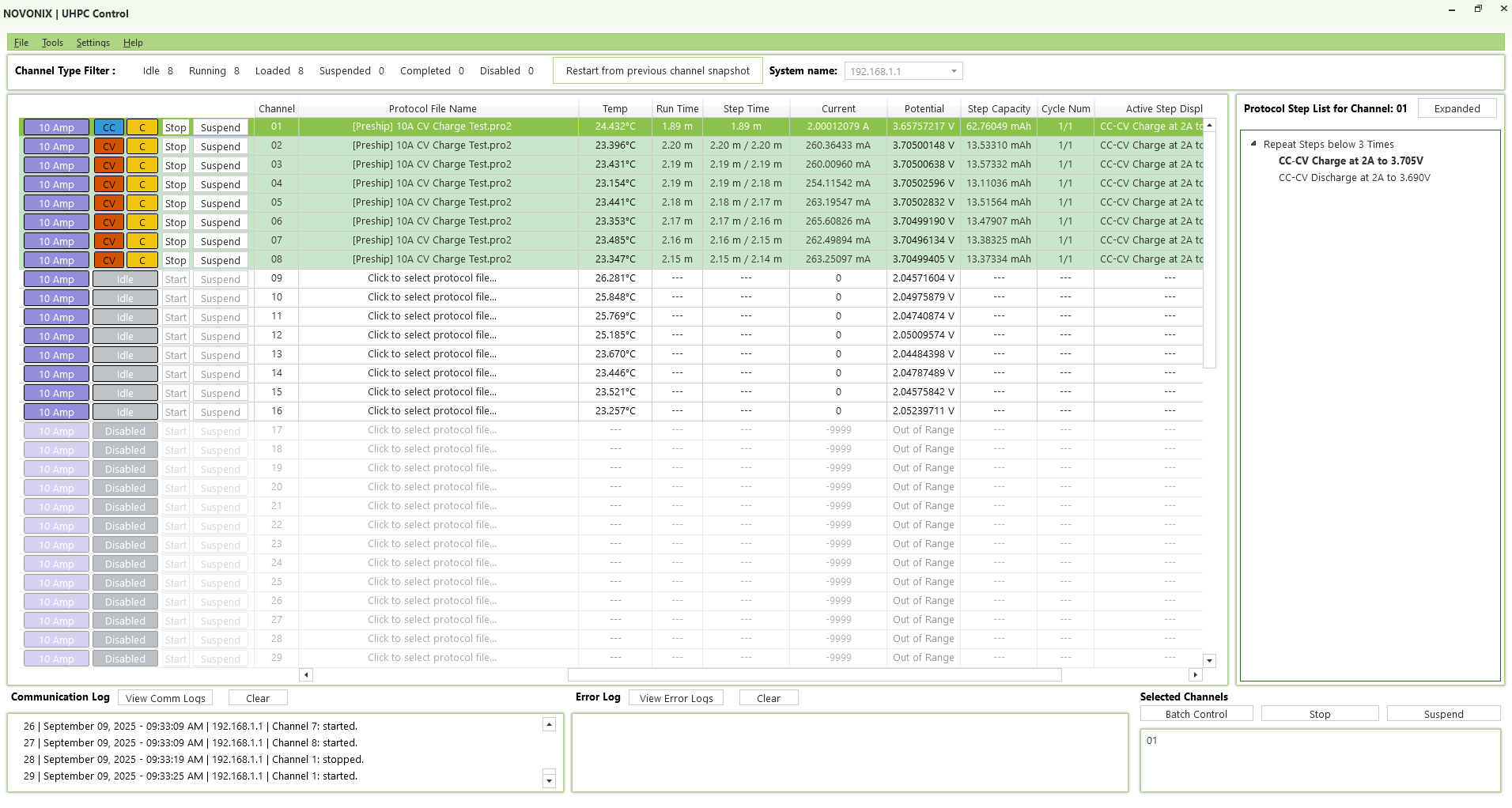
NOVONIX’s pilot production lines include precisely controlled electrolyte to ensure the proper volume of electrolyte is added to the cell. They developed different electrolyte filling protocols appropriate to different cell formats and sizes NOVONIX has studied how different electrolyte formulations distributes themselves by opening cells after formation and evaluating formation and cycling data using NOVONIX’s UHPC testing equipment to look for signs of insufficient or excess electrolyte filling. Insights from these studies guide how to adjust filling protocols for next-generation electrolytes that might have different viscosities or for cells of various formats and sizes. Ensuring efficient and thorough electrolyte injection is part of NOVONIX’s overall mission to achieve consistent high quality prototype cell manufacturing.